
PuurBalance 2-0-0: Organic Amino Acids and Micronutrients for Complete Plant Nutrition
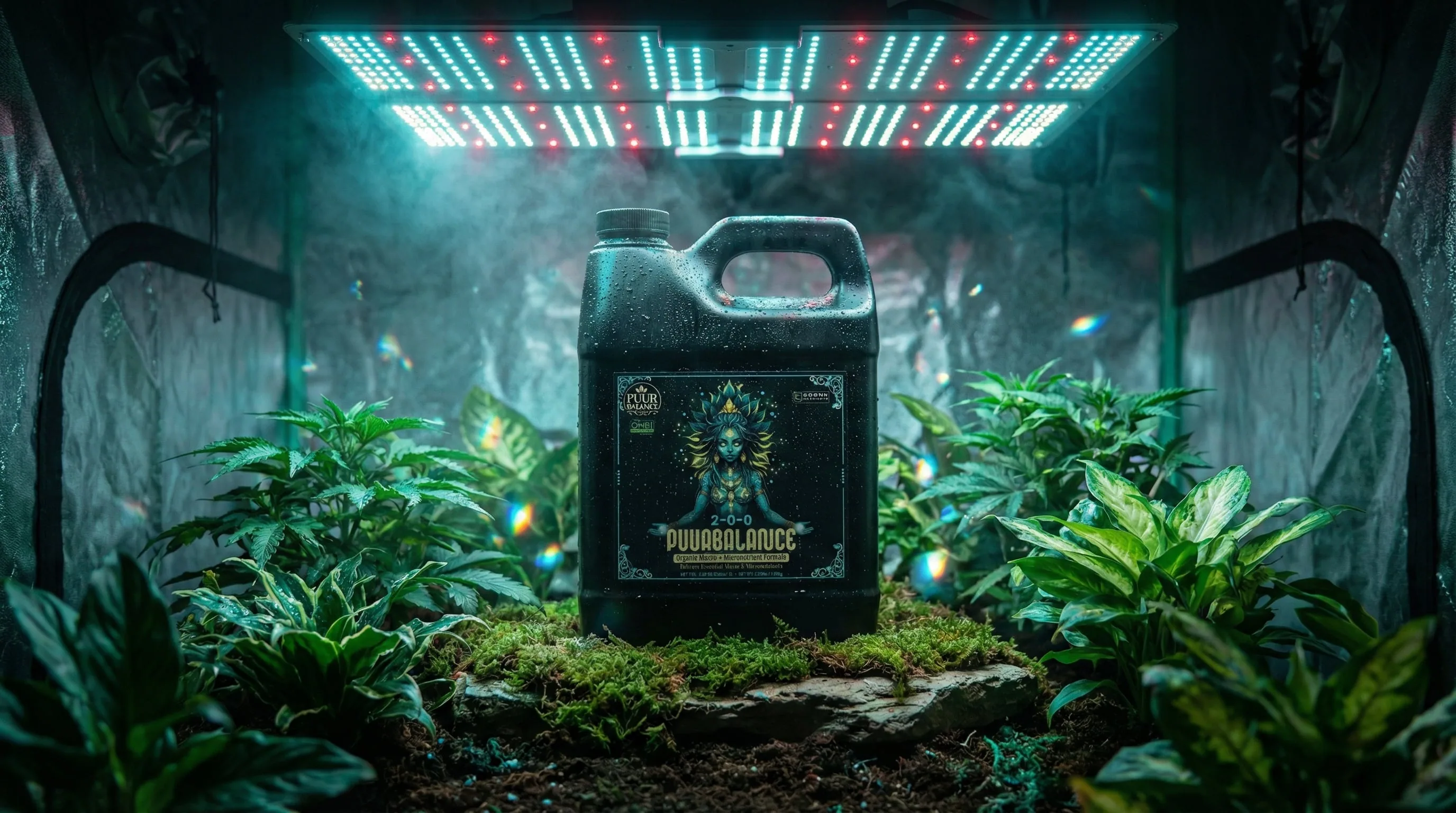
PuurBalance 2-0-0 is an OMRI-certified organic supplement containing 21 plant-based L-amino acids and a complete spectrum of chelated micronutrients. It improves nutrient uptake efficiency, corrects trace mineral deficiencies, and provides the building blocks plants need for protein synthesis—essential components often missing from organic feeding programs.
The Science Behind PuurBalance
Why Amino Acids Matter
Amino acids are the building blocks of proteins. Every enzyme, structural protein, and transport molecule in plants is built from amino acids. While plants can synthesize amino acids from nitrogen, this process requires:
- Significant ATP energy expenditure
- Active enzyme systems that may be limited during stress
- Carbon skeletons from photosynthesis
- Time that could be spent on growth and flowering
Providing pre-formed L-amino acids allows plants to:
- Conserve energy – Skip the energy-intensive synthesis process
- Accelerate protein production – Build enzymes and structures faster
- Improve stress recovery – Maintain protein synthesis when internal resources are limited
- Enhance nutrient transport – Amino acids serve as natural chelating agents
The 21 L-Amino Acids in PuurBalance
PuurBalance provides all 21 standard amino acids in their biologically active L-form:
| Amino Acid | Function in Plants |
|---|---|
| Glycine | Chlorophyll synthesis, chelation |
| Glutamic Acid | Nitrogen transport, chlorophyll |
| Proline | Stress tolerance, cell wall strength |
| Alanine | Energy metabolism, nitrogen storage |
| Leucine | Protein synthesis regulation |
| Valine | Growth regulation, stress response |
| Isoleucine | Protein synthesis, immunity |
| Serine | Phospholipid synthesis, signaling |
| Threonine | Cell wall synthesis, immunity |
| Methionine | Ethylene precursor, stress tolerance |
| Phenylalanine | Phenolic compounds, lignin |
| Tyrosine | Secondary metabolites, hormones |
| Tryptophan | Auxin (growth hormone) precursor |
| Histidine | Metal binding, catalysis |
| Lysine | Protein structure, immunity |
| Arginine | Nitrogen storage, root development |
| Aspartic Acid | Nitrogen transport, energy |
| Asparagine | Nitrogen storage and transport |
| Glutamine | Nitrogen assimilation, transport |
| Cysteine | Sulfur metabolism, antioxidants |
| Hydroxyproline | Cell wall structure |
Micronutrients in PuurBalance
PuurBalance delivers essential micronutrients in amino acid-chelated forms:
Iron (Fe)
- Central component of chlorophyll synthesis
- Essential for electron transport in photosynthesis
- Required for nitrogen fixation enzymes
Zinc (Zn)
- Activates over 300 enzymes
- Essential for auxin (growth hormone) production
- Required for protein synthesis
Manganese (Mn)
- Critical for photosystem II (water-splitting)
- Activates enzymes in nitrogen metabolism
- Required for lignin synthesis
Copper (Cu)
- Essential for photosynthesis and respiration
- Required for lignin synthesis (stem strength)
- Activates several oxidase enzymes
Boron (B)
- Critical for cell wall formation
- Required for pollen development and fruit set
- Supports sugar transport
Molybdenum (Mo)
- Essential for nitrate reductase enzyme
- Required for nitrogen metabolism
- Needed in only trace amounts
Amino Acid Chelation Explained
Traditional mineral fertilizers use inorganic salts (sulfates, chlorides, EDTA) that can:
- Precipitate with phosphates at certain pH levels
- Become unavailable in alkaline conditions
- Compete for absorption sites
Amino acid chelates overcome these limitations:
- Stability – Amino acids wrap around metal ions, protecting them from precipitation
- Recognition – Plants have evolved specific transporters for amino acids
- Efficiency – Chelated minerals enter plants along with their amino acid carriers
- pH tolerance – Remain available across wider pH ranges than inorganic forms
Application Rates
Root Application
| Growth Stage | Rate (mL/gallon) | Frequency |
|---|---|---|
| Seedling/Clone | 1-2 mL | Every feeding |
| Vegetative | 2-3 mL | Every feeding |
| Flowering | 2-3 mL | Every feeding |
| Stress Recovery | 3-4 mL | Until recovery |
Foliar Application
- Rate: 2-3 mL per gallon
- Timing: Early morning or evening (avoid hot sun)
- Frequency: Weekly or as needed for deficiency correction
- Coverage: Mist both sides of leaves until runoff
Mixing Instructions
Mixing Order in PuurOrganics System
- Start with water at room temperature
- Add Armadillo Armour (if using silica—always first)
- Add PuurNitro
- Add PuurPhos
- Add PuurK
- Add PuurCalMag
- Add PuurBalance (amino acids help chelate all nutrients)
- Add Sticky Bandit (if using)
- Check and adjust pH
- Add Monkey Juice (if using—always last, after pH)
Plants and Growing Systems
All Plants Benefit
Every plant requires amino acids and micronutrients. PuurBalance is beneficial for:
- Cannabis and hemp
- Vegetables and fruits
- Herbs and flowers
- Trees and shrubs
- Houseplants
Growing System Compatibility
- Soil: Excellent. Amino acids also feed beneficial microbes
- Coco coir: Excellent. Provides micronutrients coco doesn't supply
- Hydroponics: Excellent. Fully soluble, no sediment
- Living soil: Excellent. Supports soil food web
Compatibility
Compatible Products
- All PuurOrganics products (PuurNitro, PuurPhos, PuurK, PuurCalMag)
- Cronk additives: Sticky Bandit, Monkey Juice, Bud Booster, Armadillo Armour
- Compost teas and microbial inoculants
- Organic pest and disease management products
NOT Compatible
- Cronk Classic Line (Micro, Grow, Bloom)
- Cronk Bonnie & Clyde
- Other synthetic base nutrients
Signs of Micronutrient Deficiencies
Iron Deficiency
Interveinal chlorosis on NEW leaves (unlike magnesium which affects old leaves). Leaves may turn nearly white in severe cases.
Zinc Deficiency
Small, narrow leaves with interveinal chlorosis. "Little leaf" appearance. Shortened internodes.
Manganese Deficiency
Similar to iron deficiency but less severe. Interveinal chlorosis with tan/gray spots between veins.
Copper Deficiency
Wilting of new growth despite adequate water. Light green to yellow new leaves. Weak stems.
Boron Deficiency
Distorted, hollow stems. Poor flower and fruit development. Death of growing tips.
Frequently Asked Questions
What are L-amino acids and why do plants need them?
L-amino acids are the building blocks of proteins. While plants can synthesize amino acids from nitrogen, this process requires significant energy. Providing pre-formed L-amino acids allows plants to build proteins directly, conserving energy for growth and flower production. The "L" designation indicates the biologically active form that plants can use immediately.
How does amino acid chelation improve micronutrient absorption?
Amino acids wrap around metal ions (iron, zinc, copper, etc.) creating organic complexes that plants recognize and absorb more efficiently than inorganic mineral salts. Amino acid chelates also remain stable across wider pH ranges and don't precipitate with phosphates like unchelated minerals do.
Can I use PuurBalance as a foliar spray?
Yes. PuurBalance is excellent for foliar application at 2-3 mL/gallon. Amino acids are absorbed directly through leaf surfaces, providing rapid uptake of both amino acids and chelated micronutrients. Spray in early morning or evening to avoid leaf burn.
Why is PuurBalance important in organic growing?
Organic growing systems often lack the complete micronutrient spectrum that synthetic fertilizers provide. PuurBalance fills this gap with OMRI-certified micronutrients in amino acid-chelated forms. It also provides the amino acids that support beneficial soil microbes, creating a healthier root zone ecosystem.
Storage and Handling
- Store in cool, dark location
- Keep bottle sealed when not in use
- Shelf life: 2 years unopened, 1 year after opening
- Shake well before each use
- OMRI Listed for certified organic production
Need Help?
Our grow support team is here to help you get the best results with PuurBalance and the complete PuurOrganics system. Contact us at [email protected] or visit our Grower's Resource Center for feed charts and growing guides.