
THC vs Terpenes: Why the Smell Is the Story (And How to Grow More of It)
You've grown the 28% flower that tasted like cardboard. You've also grown the 19% that stopped you mid-exhale and made you sit down for a second. We all have. So what's the difference?
Terpenes. Almost every time, it's the terpenes.
These are the aromatic compounds that give your flower its smell, its flavor, and a real role in how the plant hits you. And here's the part most growers sleep on: you can actually influence terpene production. A lot. It's not just genetics. Your environment, your nutrition program, even your harvest timing all play into it.
We put this guide together to break down the science without the fluff. What terpenes actually are, why they matter way more than most people think, what the research says about the entourage effect, and what you can do in your grow right now to push your terpene expression harder.
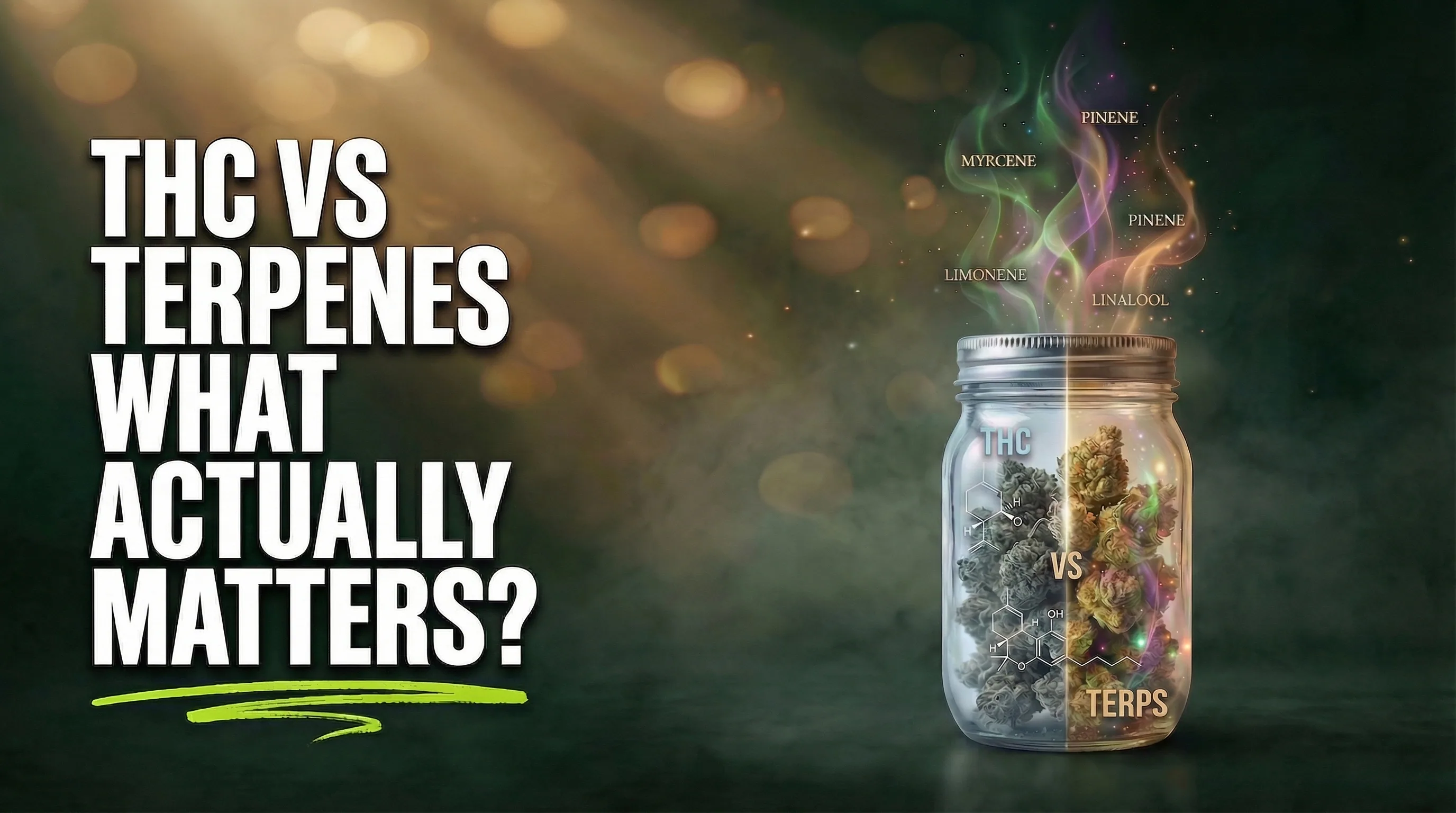
What Terpenes Actually Are
Terpenes get made in the trichomes. Same resin glands that produce THC, CBD, all the cannabinoids. They're not exclusive to cannabis either. Terpenes are everywhere in nature. They're the reason lavender smells like lavender, why black pepper has that bite, why a lemon smells like a lemon. Cannabis just happens to produce a ridiculous variety of them. Over 200 identified so far.
Most show up in trace amounts. A handful dominate any given cultivar. From the plant's perspective, terpenes exist to deter pests, attract pollinators, and deal with environmental stress. From your perspective as a grower, they're the difference between flower that sells itself and flower that sits in a jar.
THC is one compound. It binds to CB1 receptors, gets you high, and it's easy to slap a number on a label. But that number tells you almost nothing about how the flower actually smokes. A THC percentage is like judging a meal by the calorie count. Technically measurable. Practically useless on its own.
The Entourage Effect: What the Research Actually Says
Back in 2011, Dr. Ethan Russo, a neurologist and cannabis researcher, published a paper in the British Journal of Pharmacology that changed the conversation. He looked at how cannabinoids and terpenes interact inside the plant and inside the body. His conclusion: they work together. Synergistically. Terpenes can modulate how cannabinoids bind to receptors and contribute to the overall experience in ways that no single compound does on its own.
This is what people call the entourage effect, and it's not some fringe theory at this point. It's widely discussed in cannabis research and it's the entire basis for why full-spectrum extracts exist as a separate category from isolates.
Now, the honest caveat. A lot of the studies are still preclinical. Individual responses vary a ton. But Russo's core finding holds up: THC percentage alone is a terrible predictor of how flower will actually hit. The full chemical picture matters. A lot.
If you're a grower, the takeaway is simple. Optimizing for terpenes isn't a vanity project. It's a real quality lever.
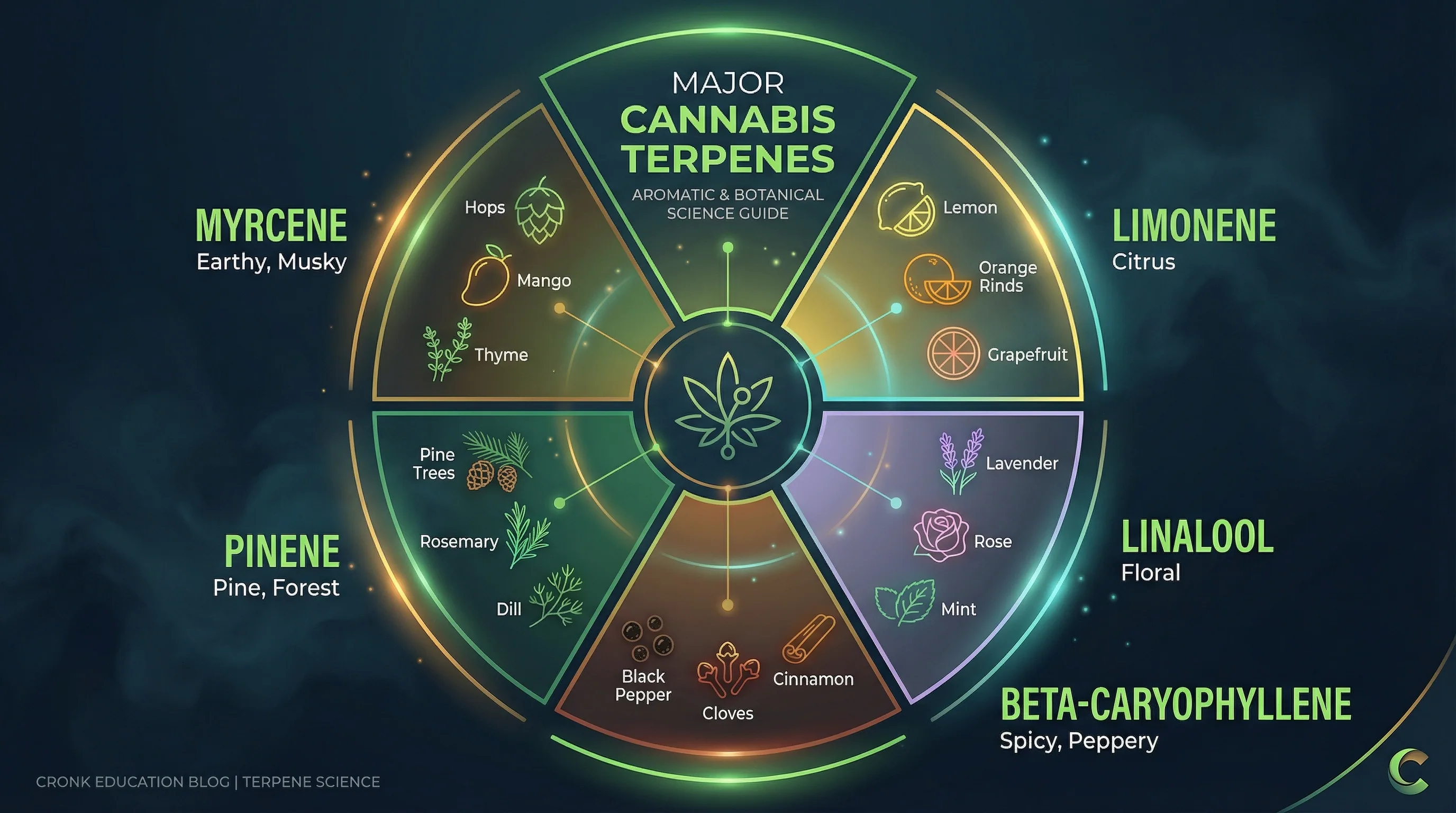
The Six Terpenes Worth Knowing
You don't need to memorize all 200. These six show up the most in lab reports and grower conversations. Learn these and you'll understand most of what you're smelling in your flower.
Myrcene
The most common one. Earthy, musky, kind of herbal. Also found in hops, mangoes, and thyme. If your flower has that heavy, indica-leaning character, myrcene is probably the dominant terp. Research points to sedative effects, though the human studies are still catching up.
Limonene
Citrus. Bright. You know it immediately. Second most abundant terpene in cannabis. Shows up in anything with a lemon or orange character. Found in citrus rinds too, obviously. Strains that lean limonene tend to feel more uplifting and energized. There's a decent amount of research on mood-related effects.
Linalool
This one's the lavender terpene. Floral, a little spicy. Shows up in calmer cultivars and it's probably the most studied terpene outside of cannabis. Tons of aromatherapy and pharmacology research pointing to anti-anxiety properties. If a strain makes you feel genuinely relaxed without the couch lock, check the linalool content.
Beta-Caryophyllene
This is the interesting one. Beta-caryophyllene actually binds to CB2 receptors in your endocannabinoid system. That makes it both a terpene and technically a dietary cannabinoid. Spicy, peppery. Found in black pepper, cloves, rosemary. One of the most researched cannabis terpenes, especially around anti-inflammatory effects.
Pinene
Smells exactly like you'd expect. Pine trees. Forest air after rain. Alpha-pinene is actually the most abundant terpene in nature, period. In cannabis, pinene-heavy strains tend to have a clean, sharp nose. Some research suggests it helps with alertness and might partially offset THC's short-term memory effects. Interesting stuff, though we need more human trials.
Humulene
Earthy, woody, slight spice. Also found in hops, which is why certain IPAs and certain cannabis share that dank overlap. Humulene usually plays a supporting role rather than dominating, but it adds real complexity to a profile. Often shows up alongside beta-caryophyllene in research.
How the Plant Makes Terpenes
Terpenes get synthesized in the trichomes through two biochemical pathways: the mevalonate pathway and the MEP pathway. Without going full chemistry lecture, the plant is building complex molecules from simpler ones, and it takes resources to do it. Terpene production is metabolically expensive. The plant only cranks them out when it has the headroom.
Three things drive terpene expression: genetics set the ceiling. Environment sets the conditions. Nutrition provides the fuel. You can't grow a loud terpene profile out of genetics that don't have it. But you absolutely can leave potential on the table with bad growing practices. And you can push expression to its max with good ones.
Light quality matters. Temperature swings in late flower can stimulate production. Those are real tools but they come with tradeoffs and they're a topic for another article. What most growers have more direct control over, and what gets overlooked the most, is the root zone.
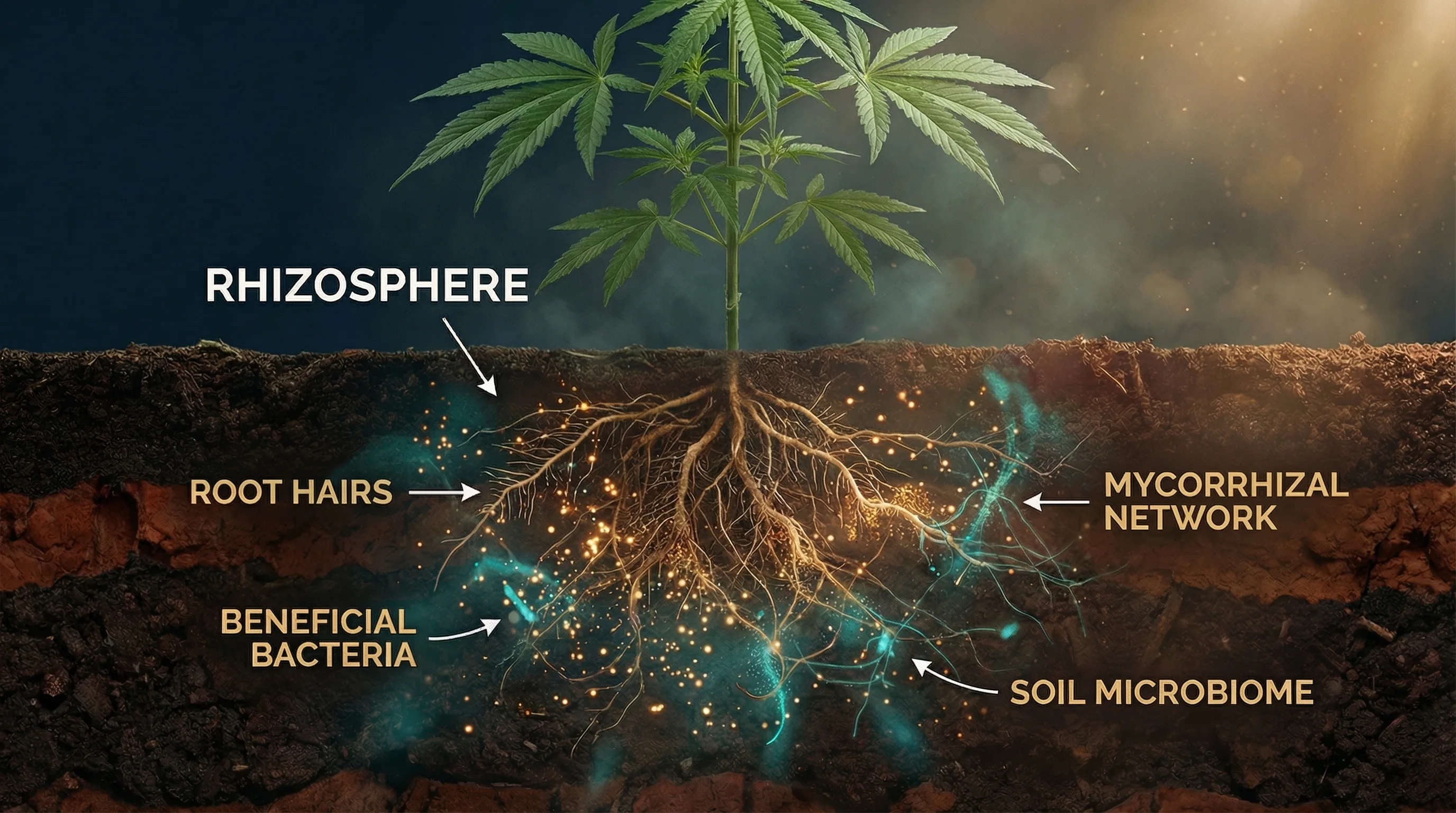
Why Root Biology Matters for Terpenes
Terpenes don't get produced in a vacuum. Everything the plant does above ground depends on what's happening below it. And the root zone is where a massive amount of the action is.
The rhizosphere is the thin zone of soil right around the roots. Biologically, it's one of the densest environments on the planet. One gram of healthy rhizosphere soil has hundreds of millions of microorganisms. Bacteria, fungi, protozoa, all interacting with the roots constantly.
And this isn't passive. Your plant is actively feeding these microbes. It pushes sugars, amino acids, and organic acids out through the roots to attract and sustain beneficial microbial communities. In return, those microbes cycle nutrients, unlock minerals, produce growth hormones, and fight off pathogens. The healthier that ecosystem is, the more efficiently your plant can put energy toward secondary metabolites. Like terpenes.
This is established science, not speculation. Research on plant growth-promoting rhizobacteria (PGPR), including Bacillus strains, shows clear links between root zone biology and overall plant metabolic output (Berendsen et al., 2012; Gouda et al., 2018). A well-fed root zone gives the plant permission to do what its genetics are programmed to do.
Mistakes That Kill Your Terpene Profile
Before we talk about what helps, here's what hurts. Most of this is preventable.
Harvesting Too Early
Terpenes peak at full trichome maturity. Amber to milky, depending on what you're going for. Chopping even a week early can cut your total terpene content significantly and flatten the complexity of the aroma. Get a loupe or a digital microscope. Don't eyeball it.
Flushing Too Hard, Too Soon
A long aggressive flush starves the plant of the nutrients it needs to finish terpene synthesis. The modern thinking leans toward shorter flushes, 3 to 5 days, or no flush at all in coco and hydro where buildup is minimal. The old-school two-week flush probably cost you terps.
Overfeeding Late in Flower
High salt loads and unbalanced nutrition in the final weeks stress the plant and pull resources away from secondary metabolite production. This happens a lot with aggressive PK boosters at higher doses than the research supports. Our Bud Booster runs a moderate 0-1-3 ratio for exactly this reason, based on cannabis phosphorus research showing no yield benefit above 80 mg/L P (Bevan et al., 2021).
Bad Drying and Curing
This is probably where more terpenes get destroyed than anywhere else in the entire process. Terpenes are volatile. Heat kills them. UV kills them. Rushing the dry kills them. Slow dry at 60 to 65°F, 55 to 60% relative humidity, then a proper cure in sealed jars. That's it. There's no shortcut here.
How to Actually Support Terpene Production
With the biology covered, here's what moves the needle in practice.
Keep Your Root Zone Dialed
Overwatering, pH swings, salt buildup. Any of these limit nutrient uptake, which means less fuel for everything including terpene synthesis. Keep your pH right for your medium (5.8 to 6.2 for coco, 6.0 to 6.5 for soil). Watch your EC. Support the biology in your root zone. This is the foundation that everything else builds on.
Feed the Microbes
If you're growing in living soil or organic media, the microbial community is the engine. It needs fuel.
Sticky Bandit is a plant-derived carbohydrate supplement. It provides fermentable sugars that feed the beneficial microorganisms in your root zone. More microbial activity means healthier roots, better nutrient cycling, and a plant that has the metabolic resources to push terpene production.
We want to be straight about the science here. We're not saying Sticky Bandit directly increases your terpene percentages. The relationship works through microbial and metabolic support. Growers consistently tell us they get richer aroma and heavier resin when running it alongside good biology, but there aren't cannabis-specific clinical trials on carbohydrate supplementation and terpene output yet. The mechanism is well supported in soil science. The direct cannabis claim still needs peer review.
Use it from early flower through mid-flower, weeks 1 through 5 of bloom, at 4 to 6 mL per gallon. Stop 2 to 3 weeks before harvest so you don't get residual sweetness in the final product. And if you're running sterile hydro without any living microbial population, the benefits drop off. Sticky Bandit feeds organisms that need to actually be there.
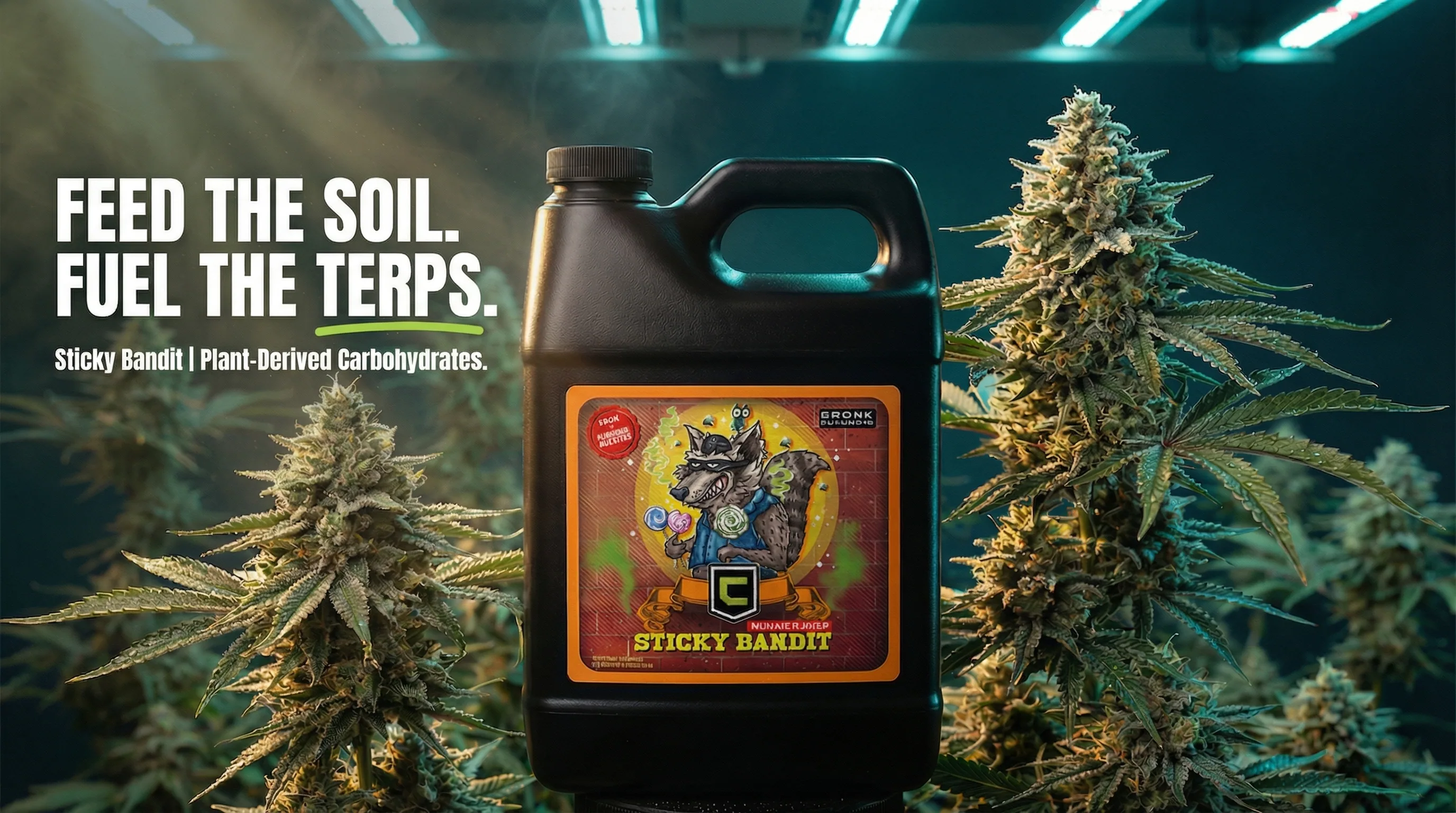
Stack It with Beneficial Bacteria
Sticky Bandit and Monkey Juice were designed to work as a pair. Monkey Juice brings in Bacillus subtilis and Bacillus licheniformis, beneficial bacteria that support root health, cycle nutrients, and suppress pathogens. Sticky Bandit feeds them. Together they build a more active and diverse rhizosphere. One tip: add Monkey Juice last in your mix, after pH adjustment. The live cultures don't love pH extremes before they're diluted.
Bud Booster for Structure, Sticky Bandit for Quality
Different tools for different goals, and they stack well. Bud Booster (0-1-3) gives you the phosphorus and potassium for flower density and structure during weeks 3 through 7 of bloom. Sticky Bandit works the quality side: flavor, aroma, resin. Most growers who care about the end product run both.
If you're using Bud Booster alongside Classic Bloom, drop your Bloom dose by about 25% to keep total salt load in check. Watch your EC. Let the plants tell you what they want.
The Bottom Line
THC is easy to measure and easy to market, but it's not the whole picture. Not even close. Terpenes are why two strains at the same THC number feel completely different. They're why your buddy's old-school clone always smokes better than half the dispensary shelf. They're the gap between flower that's technically strong and flower that's genuinely good.
Growing for terpenes means treating your plants like complete biological systems. Good genetics, a healthy root zone, the right nutrition at every stage, a clean finish, and a patient cure. None of it is complicated. It just takes attention.
If you want to get into the specifics of what to feed and when, our feed charts cover every stage across all three Cronk lines.
Got questions about your setup? Hit up our grow support team. That's literally what we're here for.
Frequently Asked Questions
Do terpenes affect how cannabis feels?
The research says yes. Terpenes interact with cannabinoids and influence the overall effect profile. This is called the entourage effect (Russo, 2011). Myrcene leans sedating, limonene leans uplifting, and beta-caryophyllene actually binds to CB2 receptors directly. Everyone responds a little differently, and more cannabis-specific research is still needed, but the pattern is clear enough that most experienced growers and extractors pay close attention to terpene profiles.
What is the entourage effect?
It's the idea, backed by research from Russo (2011), that cannabinoids and terpenes work better together than any of them do alone. The full chemical profile of the plant shapes the experience, not just the THC number. It's why full-spectrum products exist and why isolates hit differently.
How do I increase terpene production?
Start with the basics: healthy soil biology, dialed-in pH, and don't overfeed in late flower. Harvest at peak trichome maturity, not a day before. Support your root zone microbiology with carbohydrate supplements like Sticky Bandit to give the plant the metabolic resources it needs. And don't rush the dry and cure. That's where most growers lose the most terpenes without even realizing it.